
Human-in-the-Loop Agents: when to require review, when to automate, how to log decisions
Hannah Lincoln-Abbott

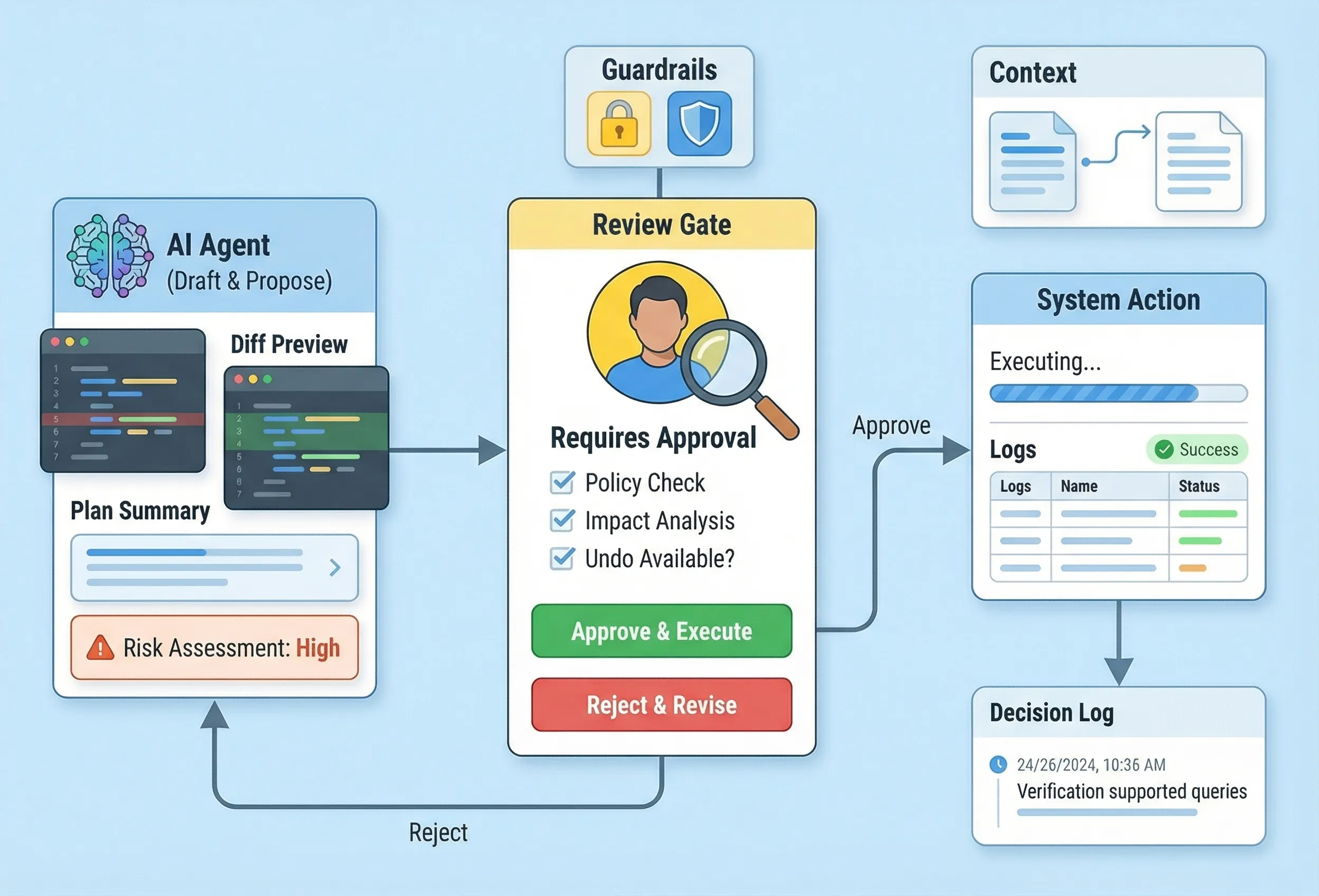
Human-in-the-Loop Agents: when to require review, when to automate, how to log decisions

Agents are moving from “answer questions” to “do work”: filing tickets, changing settings, running scripts, editing content, deploying changes. That shift is less about model quality and more about agency—the ability to take actions in real systems. The catch is simple: the moment an agent can act, you inherit the failure modes of automation and the ambiguity of language. “Human-in-the-loop” isn’t a conservative stance. It’s how you ship...

Read more

AI for UI Tests: generating Playwright/Cypress tests + fixtures, mocks, and data seeding
Hannah Lincoln-Abbott

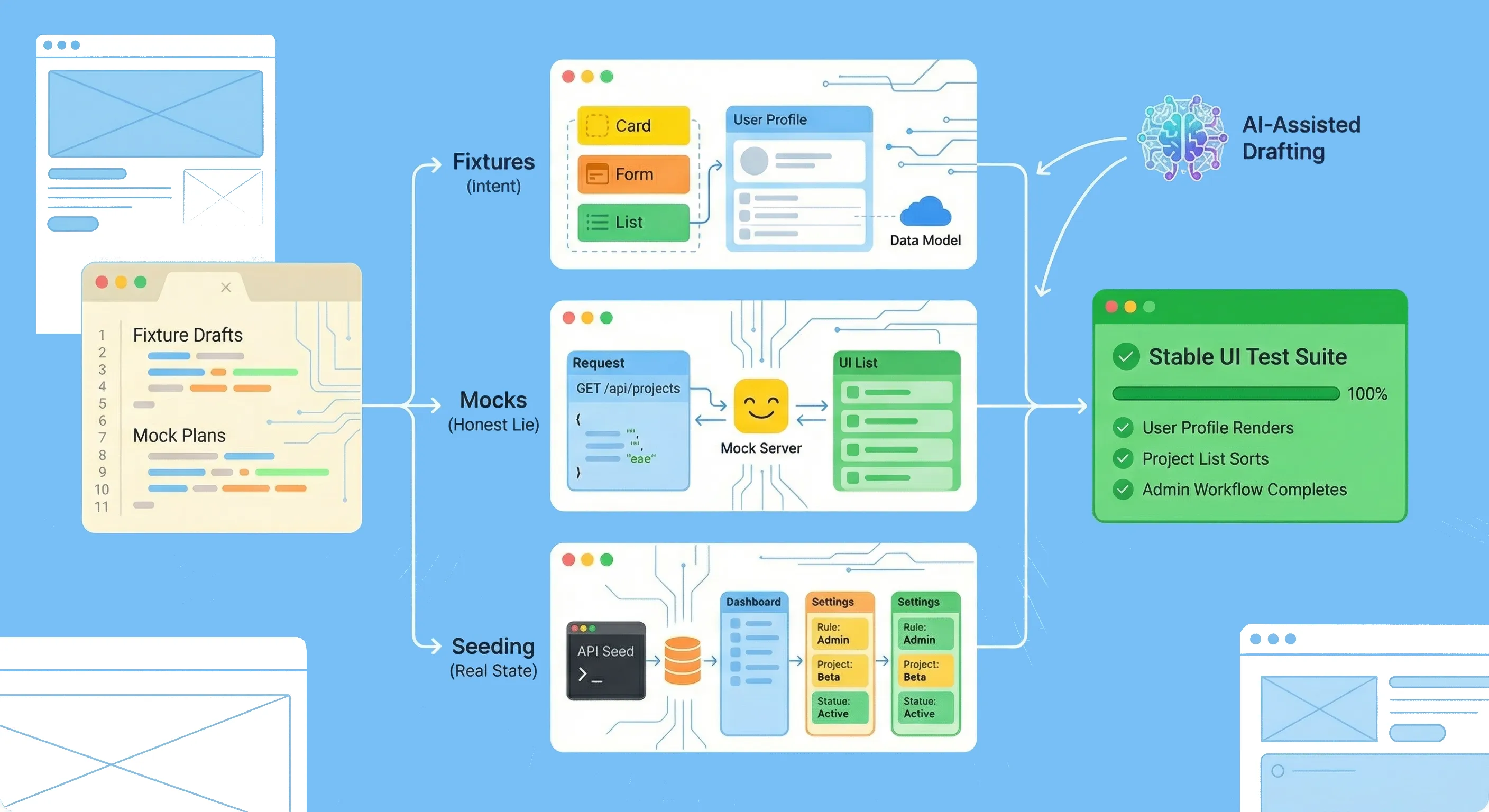
AI for UI Tests: generating Playwright/Cypress tests + fixtures, mocks, and data seeding

AI can absolutely help you write UI tests faster. The trap is thinking the “writing” part is the hard part. In practice, most UI test suites fail for the same reasons: brittle selectors, non-deterministic data, leaky environment state, and tests that don’t actually prove the user outcome. AI can speed up all of that too—but only if you use it inside a workflow that’s grounded in real fixtures, intentional mocks, and predictable data seeding....

Read more

AI + Accessibility: Faster Audits, Better Fixes (Human‑Verified)
Hannah Lincoln-Abbott

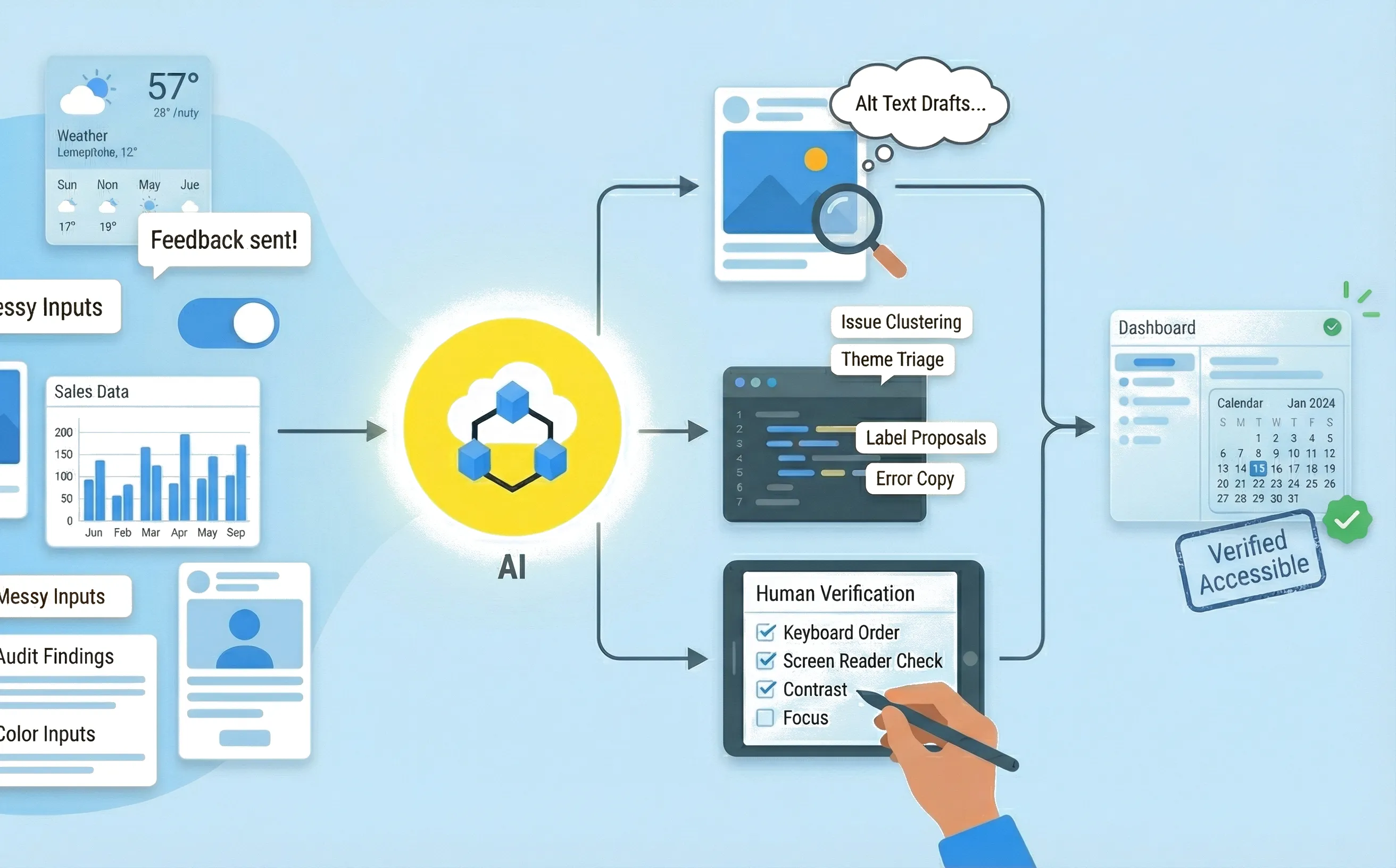
AI + Accessibility: Faster Audits, Better Fixes (Human‑Verified)

Accessibility work usually doesn’t fail because teams don’t care. It fails because it’s time‑expensive, scattered across tickets, and full of “we’ll come back to it.” AI can help—a lot—but only if you treat it like what it is: a drafting and pattern‑finding tool, not a compliance oracle. The goal of this post is simple: move faster on accessibility without shipping confident mistakes. AI is a multiplier, not a judge AI is great at turnin...

Read more

Designing Loading in Product UIs: Spinners vs Skeletons vs Optimistic UI (When Each Is Right)
Hannah Lincoln-Abbott

Designing Loading in Product UIs: Spinners vs Skeletons vs Optimistic UI (When Each Is Right)

Loading is a UX surface. People don’t rage at “waiting” as much as they rage at uncertainty. If you want your UI to feel calm, fast, and expensive, pick the loading pattern that answers the user’s real question in that moment: Did it register? Is it working? Am I safe to keep going? The 4-variable decision (use this every time) Duration: instant, short, long Predictability: do we know what will show up (shape) and ro...

Read more

Microinteractions That Feel Premium (Without Getting Slow)
Hannah Lincoln-Abbott

Microinteractions That Feel Premium (Without Getting Slow)

Premium isn’t more animation. Premium is confidence: every tap, click, and change in the interface feels acknowledged, intentional, and calm. Microinteractions are the tiny moments that create that confidence—button states, inline validation, “Copied” feedback, progress indicators, subtle transitions. Done well, they make a product feel polished. Done badly, they make it feel laggy, noisy, or weirdly fragile. This ...

Read more